Digitalization Can Become Micromanagement
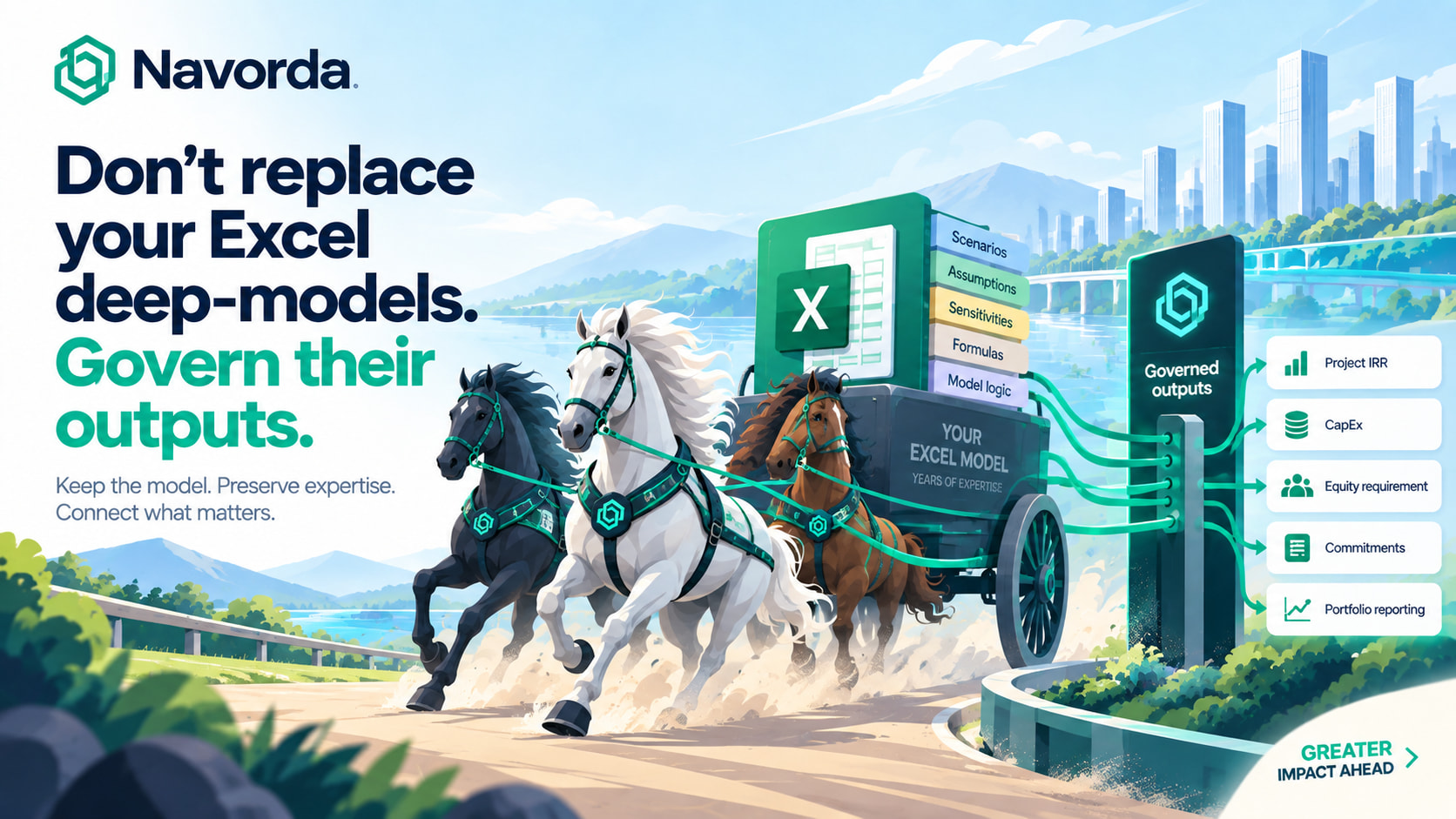
Rebuilding a financial model in the corporate system feels like governance. Often it is digital micromanagement. Keep the model; govern its inputs and outputs.


A financial model changes.
An assumption moves. CapEx changes. Project IRR changes. Another version appears.
Eventually C-Level asks:
Which number is the real one?
After enough frustration, the conclusion often becomes:
We need to get rid of Excel and digitalize the whole model.
That sounds like stronger governance.
But sometimes it is simply digital micromanagement.
The manager who controls everything
Think about a manager who is unhappy with a team’s results.
One option is to lead better:
- Clarify accountability.
- Define the outcomes that matter.
- Make commitments visible.
- Review performance properly.
The other is to control everything personally. Join every meeting. Approve every decision. Tell people exactly how to work.
It feels like more control.
But the manager becomes the bottleneck, the team loses autonomy, and everyone contributes less value.
Companies can make the same mistake with financial models.
A complex model may contain thousands of formulas, assumptions, scenarios and dependencies. It may be very good at what it does.
The real problem begins when the model becomes disconnected from corporate reality.
For example, the model may assume:
- NtP on 15 March.
- 100 MW installed capacity.
- A certain CapEx.
- A particular COD date.
Then the project evolves. NtP moves to June. Capacity changes. CapEx is updated.
But nobody refreshes the assumptions inside the model.
The formulas still calculate perfectly.
The problem is that they are now calculating the wrong reality.
And therefore the outputs — IRR, TIV, equity requirement or other investment metrics — may already be stale.
This is where governance should happen
At Navorda, we are approaching this from both sides.
On the output side, Navorda can connect an important corporate figure directly to the Excel cell that produced it. So you can trace:
Which workbook → which version → which cell → which value → when it became a governed corporate figure.
But now we can also govern the input side.
A model assumption cell can be checked against the corresponding governed value in Navorda.
If Navorda says NtP is now 30 June, but the financial model is still using 15 March, Navorda can warn the user:
The model is using an assumption that no longer reflects current project data. Its outputs may be stale.
Navorda does not overwrite the model. And it does not try to reproduce its thousands of formulas.
The model remains the specialist calculation engine.
Navorda governs the interface between the model and corporate reality.
Govern what goes in — and what matters coming out
This is the important distinction.
Governance does not necessarily mean controlling every calculation.
Sometimes you only need to know:
- Which model version is authoritative.
- Whether its key assumptions are still current.
- Which cell produced an important output.
- When that output changed.
- Which value became the corporate commitment.
That is very different from rebuilding the whole model inside a corporate application.
Because once every new country, financing structure, technology or scenario requires software development, the application itself can become the constraint.
And eventually someone opens Excel again.
So the better principle is:
Govern outcomes without micromanaging execution.
Let specialist tools do what they are good at.
But make sure the assumptions going in still reflect reality — and that the commitments coming out are traceable.
Because the objective of digital transformation should not be to make every calculation happen inside the corporate system.
It should be to make the organization easier to govern.
Keep the model. Govern what goes in — and what matters coming out.
Don’t Replace Your Excel Deep-Models. Govern Their Outputs. — the second half of the Excel argument
Excel Is Excellent — why spreadsheets win, and where they stop